
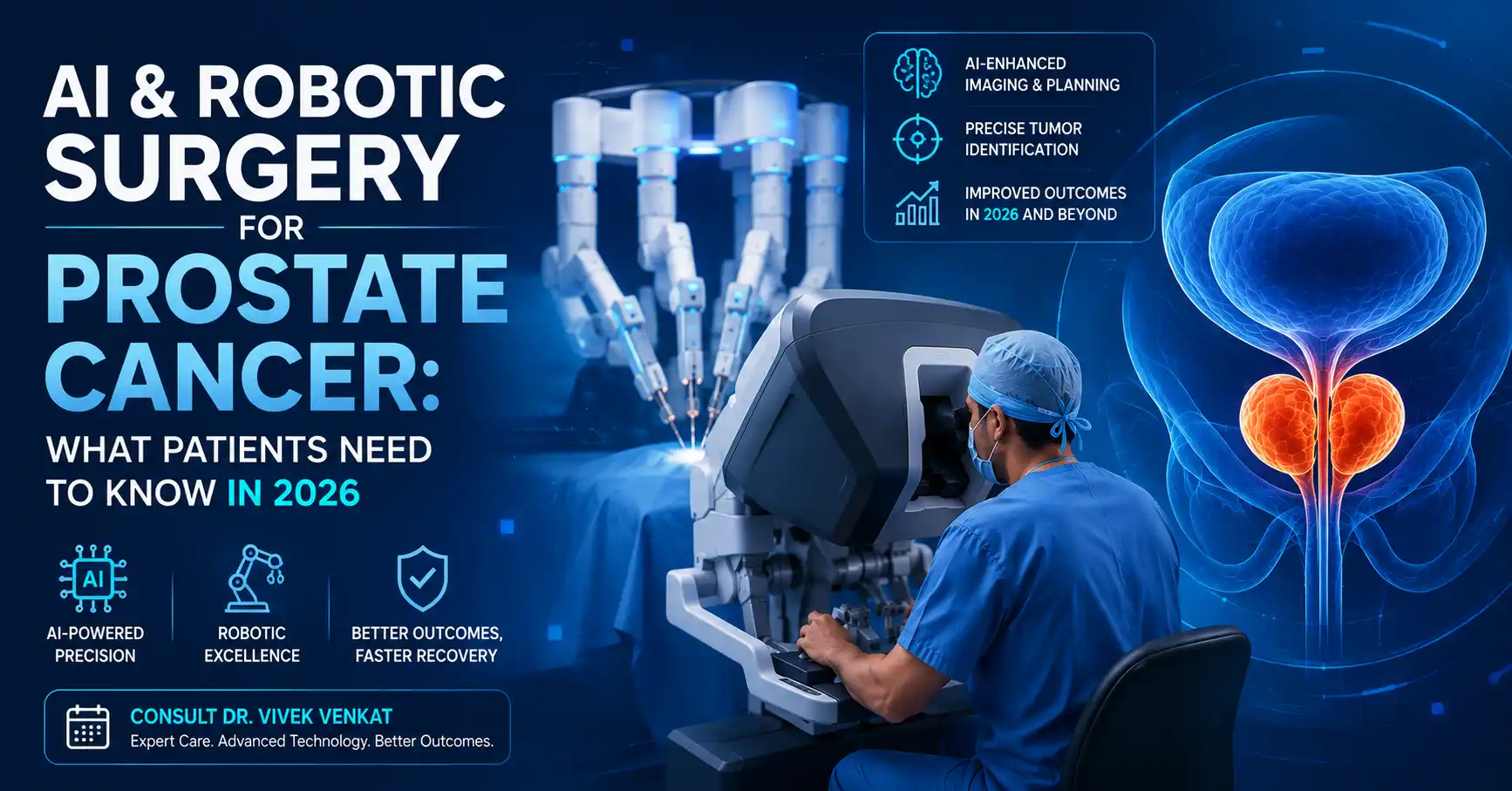
Prostate cancer remains one of the most commonly diagnosed cancers in men. While traditional open surgery has been effective for decades, technological advances have transformed treatment options. In 2026, robotic-assisted surgery combined with artificial intelligence-assisted planning is redefining prostate cancer care by improving surgical precision, reducing complications, and helping patients recover faster.
Globally, robotic prostatectomy has become the preferred surgical approach for many patients with localized prostate cancer because it offers enhanced visualization, greater surgical control, and improved functional outcomes. Emerging AI-assisted technologies are further helping surgeons analyze imaging, identify critical anatomical structures, and improve decision-making during surgery.
For patients facing a prostate cancer diagnosis, understanding these innovations can help them make informed treatment decisions.
Understanding Prostate Cancer
The prostate is a small gland located below the bladder. Prostate cancer develops when cells within the gland begin growing uncontrollably.
Common Risk Factors
- Age above 50 years
- Family history of prostate cancer
- Obesity
- Genetic mutations
- Hormonal factors
Common Symptoms
Many patients have no symptoms in early stages.
When symptoms occur, they may include:
- Frequent urination
- Weak urine stream
- Difficulty passing urine
- Blood in urine
- Blood in semen
- Pelvic discomfort
- Bone pain in advanced disease
What Is Robotic Prostate Surgery?
Robotic Radical Prostatectomy is a minimally invasive procedure in which the prostate gland is removed using robotic instruments controlled entirely by the surgeon.
The robotic system does not operate independently. Every movement is directed by the surgeon from a specialized console. The system provides:
- Magnified 3D visualization
- Tremor filtration
- Enhanced dexterity
- Precise dissection around nerves and blood vessels
Dr. Vivek Venkat specializes in robotic surgery for prostate cancer and has extensive international training in robotic uro-oncology.
Why Robotic Surgery Is Becoming the Gold Standard
Research continues to demonstrate several advantages of robotic prostatectomy over traditional open surgery.
Reduced Blood Loss
Smaller incisions and precise tissue handling help minimize bleeding.
Less Pain
Patients typically experience reduced postoperative discomfort.
Faster Recovery
Hospital stays are generally shorter, allowing earlier return to daily activities.
Better Visualization
The robotic platform provides up to 10–12 times magnification, helping surgeons identify delicate structures.
Improved Functional Recovery
Many patients experience earlier recovery of urinary continence and preservation of erectile function when nerve-sparing surgery is possible.
Diagnosed With Prostate Cancer?
Early expert evaluation can significantly influence treatment outcomes.
Schedule a consultation with Dr. Vivek Venkat to discuss:
✓ Robotic Prostate Surgery
✓ Active Surveillance
✓ Advanced Prostate Cancer Management
✓ Second Opinion for Treatment Planning
Call: +91 91360 41545
How Artificial Intelligence Is Changing Prostate Cancer Surgery
Artificial intelligence is becoming an important tool in modern uro-oncology.
Recent developments include:
AI-Assisted MRI Interpretation
AI systems can help identify suspicious areas within the prostate before biopsy.
Surgical Planning
AI-powered imaging analysis helps surgeons understand tumor location and anatomical relationships.
Real-Time Guidance
Emerging systems are being developed to enhance intraoperative decision-making while remaining under surgeon control.
Outcome Prediction
Machine learning models can estimate recurrence risks and assist in personalized treatment planning.
What Happens During Robotic Prostate Surgery?
The procedure typically involves:
- Administration of general anesthesia.
- Small abdominal incisions.
- Placement of robotic instruments.
- Removal of the prostate gland.
- Preservation of nerves whenever oncologically appropriate.
- Reconstruction of the urinary tract.
Most patients begin walking within 24 hours after surgery.
Recovery After Surgery
Recovery varies from patient to patient.
Typical recovery milestones include:
Hospital Stay
1–3 days
Catheter Duration
7–14 days
Return to Office Work
2–4 weeks
Physical Activity
4–6 weeks
Long-Term Follow-Up
Regular PSA monitoring
Who Is a Candidate for Robotic Prostatectomy?
Patients may benefit from robotic surgery if they have:
- Localized prostate cancer
- Intermediate-risk disease
- Selected high-risk prostate cancers
- Good overall health
A detailed evaluation including PSA levels, MRI findings, biopsy reports, and staging investigations helps determine suitability.
Conclusion
Robotic surgery has revolutionized prostate cancer treatment, and the integration of artificial intelligence is expected to further improve outcomes in the coming years. Patients today benefit from safer procedures, faster recovery, and highly personalized treatment planning.
For individuals diagnosed with prostate cancer, consultation with an experienced robotic uro-oncologist such as Dr. Vivek Venkat can provide access to advanced, evidence-based treatment options designed to achieve optimal cancer control while preserving quality of life.
Frequently Asked Questions
Is robotic prostate surgery better than open surgery?
Many studies show advantages including less blood loss, smaller incisions, and faster recovery.
Will robotic surgery cure prostate cancer?
When cancer is localized, surgery can provide excellent long-term cancer control.
How long does robotic prostate surgery take?
Most procedures take approximately 2–4 hours.
Is robotic surgery painful?
Patients usually experience less pain compared to traditional open surgery.
Can erectile function be preserved?
Nerve-sparing surgery may help preserve erectile function in suitable patients.
Does AI perform the surgery?
No. AI assists planning and decision-making, but the surgeon remains fully in control of the procedure.